Choosing the right smoke shaft: Early design decisions
:format:(webp)/f/79904/498x498/38ac1808bf/brad-crisp.png)
:format:(webp)/f/79904/6960x4640/6f0917f12e/snd-r-web-2.png)
In my last blog, we discussed the different options available for vertical smoke shafts: Navigating smoke shaft construction. This time out we are going to look at what considerations need to be made during planning and design to make the correct decision for any given project.
Understanding the design starting point
The journey starts early in the design process – once the fire strategy has been confirmed and we know what smoke control measures are needed to meet the building regulations – e.g. naturally ventilated smoke ventilation strategy, or a mechanical smoke ventilation system (extract or pressurisation). When comparing with the overall building layout we can then understand typical system pressures expected of that system – a taller and more complex build will require more air movement with higher air leakage, whilst a smaller building with shorter travel distances will reduce these factors. Finally, one of the more critical but overlooked considerations is around the buildability of each option and the space they will occupy.
Compliance and the challenge of smoke leakage performance
When it comes to compliance, both BS9991 and B9999 necessitate using A1 fire rated materials and preserving compartmentation – the more complicated matter comes around proving the smoke leakage performance, which is the critical performance element for a smoke ventilation shaft. A consideration needed at this point is the required effort needed to achieve the necessary smoke leakage performance – with builders work constructions (blockwork and concrete) having higher risk of air leakage and needing on site pressure tests to verify its performance, versus EN1366-8 certified smoke control duct having third party testing to prove its performance.
Why early collaboration with manufacturers matters
Once understanding the various options available and weighing up the project risks against one another, the architects can then decide about which is right for the project – but the story still doesn’t end there. Collaboration with manufacturers becomes crucial at this point in the decision-making process to make sure that suitable products and services are tested and certified for use within that structure. Being aware of this and exploring the space limitations and installation requirements of products that are tested in the chosen structure could then have a knock-on effect that can impact if the overall solution is best for the project.
:format:(webp)/f/79904/3000x1084/8d2064d3b4/cta-banner.png)
Finalising compliance details early in the design phase
Once these options have been explored based on the project size, space restrictions, smoke control design intent and buildability then it becomes a matter of finalising the smaller details and collating the associated paperwork that evidences the compliance of the full structure. This final step is extremely important to do as early as practical in the design phase, as often there can be millimetres of difference that can make certain installations non-compliant without the need to reposition structures and structural openings.
How Sertus supports better shaft decisions
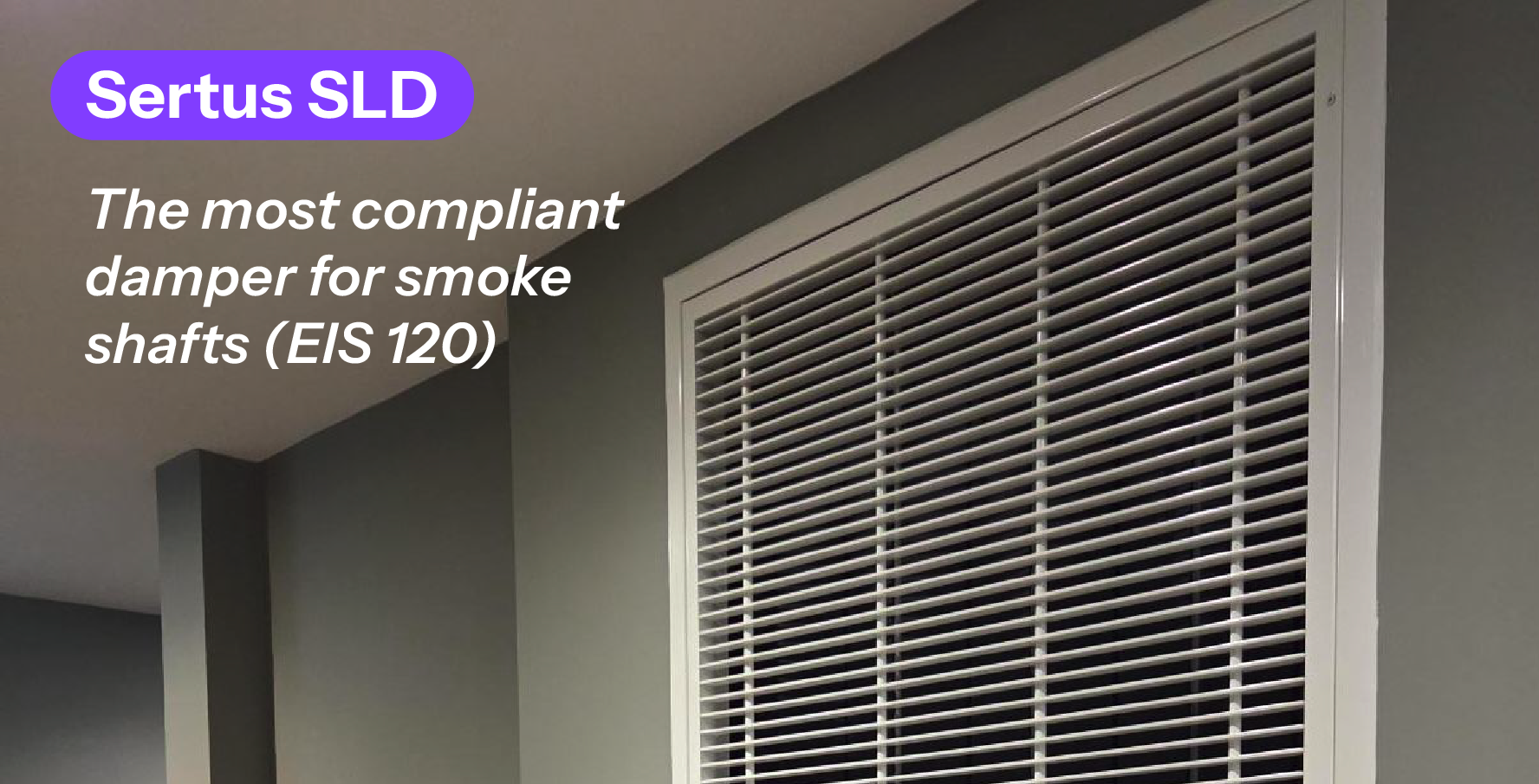
Having manufacturers that have a deep and intimate knowledge of not only their product, but also the various applications where it can be used, will make these decisions more straightforward and stop them from becoming bigger problems later down the line. Our promise to Make it Simple means we are on hand to support with this decision-making process and provide expert insight, all backed by the most compliant smoke control damper for vertical smoke shaft applications. You can find out more about the Sertus SLD on our product page here, or contact us directly to discuss your project here.
Key takeaways for contractors, designers and specifiers:
Early decisions on shaft type directly affect compliance, buildability and space planning
Leakage performance is the critical metric, and the biggest risk area
Builder’s work shafts introduce site-dependent variability and testing risk
EN1366-8 certified ducts offer predictable, proven leakage performance
Manufacturer collaboration early on prevents non-compliance “by millimetres”
Choosing tested products for the correct substrate avoids costly redesigns
The SLD is the most compliant damper for vertical shafts, with proven test data
About Sertus
Sertus is a UK-based manufacturer of smoke ventilation products, dedicated to safeguarding lives and property through unequivocally compliant, expertly engineered, and reliably manufactured solutions. Driven by our vision to be the UK’s manufacturer of choice for smoke ventilation, we’re setting the standard – leading, not following – with products that combine innovation, performance, and quality. From early-stage design through to post-install support, we partner with contractors, architects, consultants, and developers to deliver smoke ventilation that works – every time.
At Sertus, Make It Simple isn’t just a tagline – it’s our promise. We simplify the complex world of fire safety through intelligent design, clear guidance, and comprehensive support, helping our customers achieve compliant, high-performance buildings with confidence.
Learn more at sertus.uk. For media enquiries, contact hello@sertus.uk or call 01483 269999.
:format:(webp)/f/79904/1200x675/3e688ca5d6/1737034937057.jpeg)
:format:(webp)/f/79904/1500x764/9d04ae0d44/20250703_140237.jpg)
:format:(webp)/f/79904/6000x3376/a7479fd92d/nejc-soklic-xxp9rthtqcc-unsplash.jpg)
:format:(webp)/f/79904/934x1040/f7f0080362/mask-group-7.jpg)